Apostle Paul concluded his previous thoughts by saying in 7:12-16 that he had bragged to Titus before he delivered the first letter to Corinth about the congregation at Corinth. Paul said they were devoted to him and would follow his direction, as hard as it was. Paul told Titus they would, and their positive response to Paul’s first letter refreshed Titus. When this report reached Corinth in the second letter, the Corinthian congregation’s pride was bolstered.
Then, with bolstered pride, in 8:1-7, Paul bragged about the Macedonian churches’ offering for the poor in Judea. First-century Greeks were loyal and proud first and foremost of their cities. The Macedonian churches were in cities less wealthy than Corinth. Paul said the congregation was “extremely poor”. (2) They had also experienced greater persecution than Corinth (2). Still, the Macedonian churches gave freely, joyously, and generously. Paul said they “urgently pleaded for the privilege of sharing in this service to the saints” (4).
Paul sent Titus back to Corinth with this message and stated, “See that you also excel in this grace of giving”. (7) Paul seems to be using competitive pride to compel the congregation at Corinth further to do the right thing.
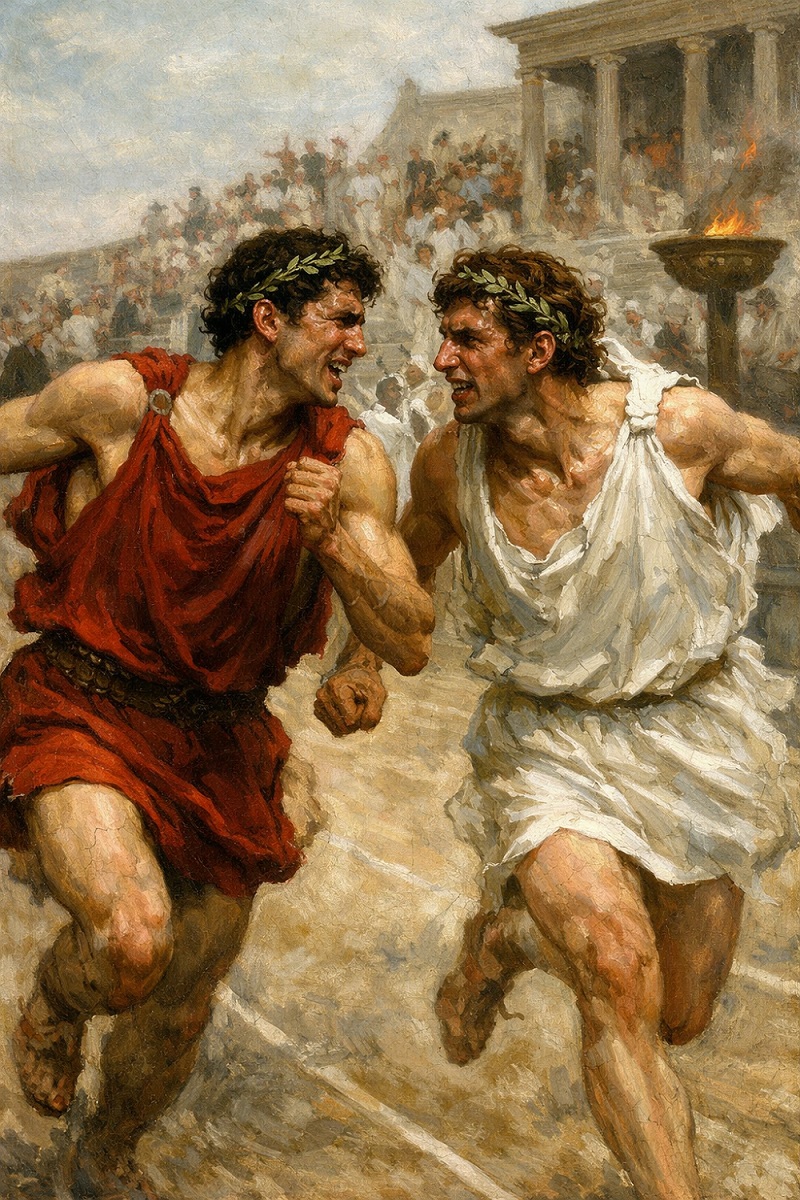
The Ancient Greek Olympian and Corinth Isthmian games were as competitive as modern sports. Paul directly or indirectly used competition for positive results. Some might consider this wrong, but here seems to be an example where Paul did not. Competition can be used for good, but like everything else, competition can also be used incorrectly.
Challenge someone to a duel of reading the Bible in a year, or praying daily for a common goal in a given amount of time, or visiting a hospital, prison, or hospice together every day for a month in the name of Christ. Hold each other accountable. Isn’t this an example of positive competition?